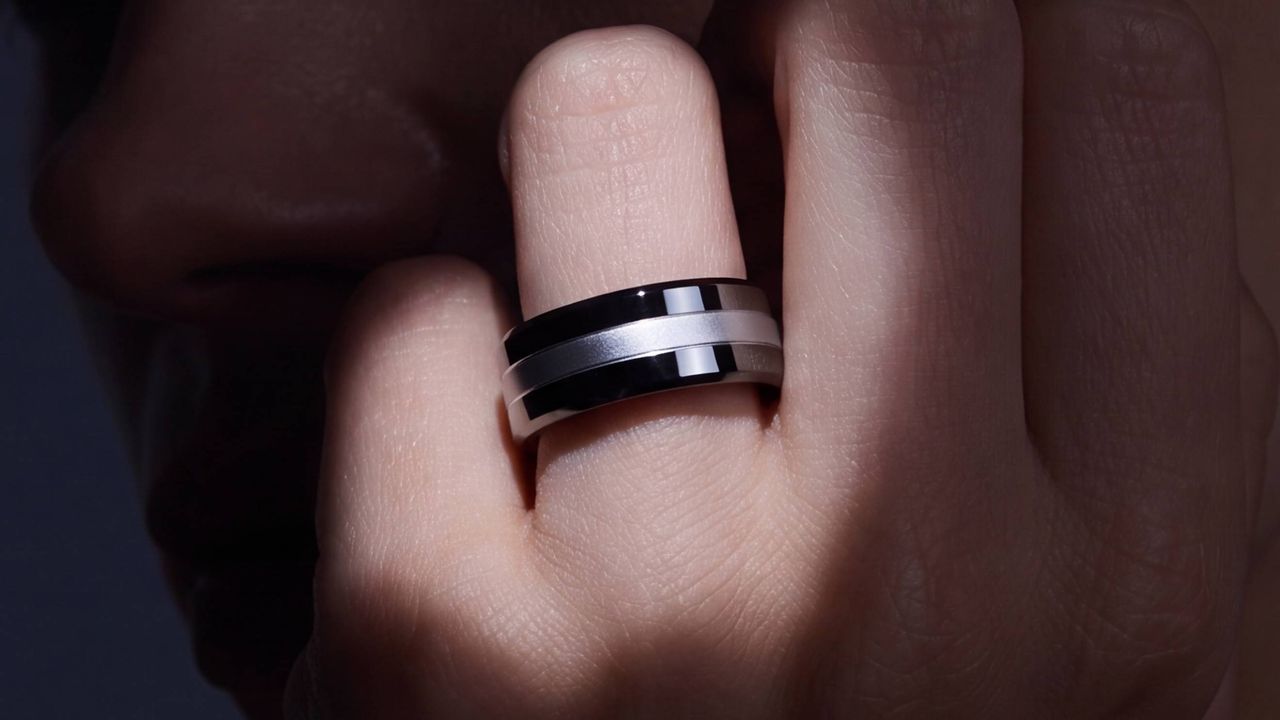
Blood pressure has long been considered the "holy grail" of PPG-powered wearable tech. Because (up until now) you really need an inflatable cuff to measure, or at least to calibrate, blood pressure readings, and that's been difficult to do with a smartwatch alone. The Huawei Watch D series incorporated a cuff into the smartwatch itself, while Apple has introduced its Hypertension Detection feature, which earmarks possible hypertension after 30 days of using an Apple Watch , but doesn't actually provide blood pressure readings. No LED-based device has really been able to crack it. Until now, apparently. The Signal Ring is the brainchild of Tom Moss, an ex-head of Android at Google who's founded several companies since leaving Google and co-founded several other companies, including drone business Skydio, which eventually ended up being bought by Razr. Signal is a smart ring with a difference: rather than provide lots of different metrics such as the Oura Ring 5 or the Samsung Galaxy Ring , or use AI assistants like the Google Fitbit Air, it's designed by "a very smart group of multidisciplined people focused on a single problem" — and that problem is blood pressure, which Moss was inspired to tackle after a cardiac event, a 'hypertensive emergency', "My blood pressure was 250. If you can imagine, for blood pressure, 120 [over 80] is healthy and fine," Moss told me. "So 250 is just like an insane amount of pressure." After his event, Moss attempted to track his blood pressure, but had difficulty with incorrectly-sized cuffs and sought a more technical solution. "I went online, I bought every kind of device that told me it could track my blood pressure, wearable or otherwise, and they're all garbage." (Image credit: Signal) Some watches, such as the Samsung Galaxy Watch series, use an initial blood pressure cuff reading to calibrate, then estimate your blood pressure by looking at other vital signs in between calibrations. But Moss found this approach frustrating and i
تقنية
No sleep score, no steps: this Signal smart ring from an ex-Google head is focused on cracking cuffless, calibration-less blood pressure readings