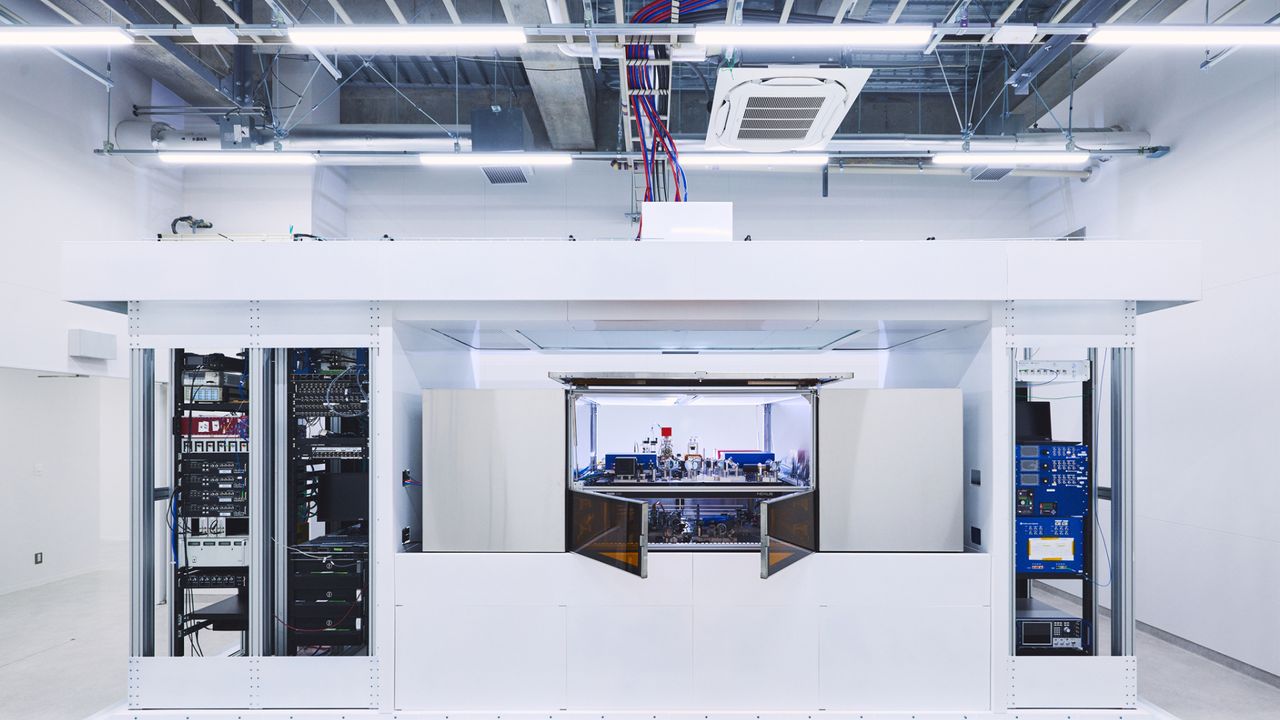
In this installment of our ongoing quantum computing roadmaps, we turn to the area that has arguably made the most significant technical strides in 2025 and early 2026: neutral atom quantum computing. Be sure to familiarize yourself with part one , which covered superconducting qubits – through IBM and Google – and trapped-ion qubits, through IonQ and Quantinuum. Part two examined quantum photonics through Xanadu's continuous-variable approach and PsiQuantum's silicon-photonic architecture. Like its predecessors, this is a technology and roadmap analysis rather than a technical deep-dive. We'll give you enough context to understand why neutral atoms have recently captured the attention of both the scientific community and major industry players, then look at what three of its key companies – QuEra, Atom Computing, and Pasqal – are building and planning. What is Neutral Atom Quantum Computing? Where superconducting qubits build their quantum systems from engineered Josephson junctions on chips, and trapped ions use electromagnetic fields to suspend individual atoms in vacuum, neutral atom quantum computing uses tightly focused laser beams – called optical tweezers – to trap individual neutral atoms in precisely controlled spatial arrangements. Each trapped atom acts as a qubit: information is encoded in the atom's internal electronic states, and operations between qubits are performed by briefly exciting atoms into what are known as Rydberg states (the neutral atom mechanism for two-qubit logic gates). These are high-energy orbitals where electrons sit far from the nucleus, enabling long-range interactions between neighboring atoms when triggered. Switching a Rydberg excitation on and off is, in functional terms, the quantum analog of a logic gate – laser on, interaction happens; laser off, atoms return to isolated, quiet stability. The atoms are laser-cooled to microkelvin temperatures during operation, but unlike superconducting systems – which require the entire c
تقنية
Neural atom quantum computing roadmap — how laser-cooled trapped atoms could pave the path beyond physical qubit counts