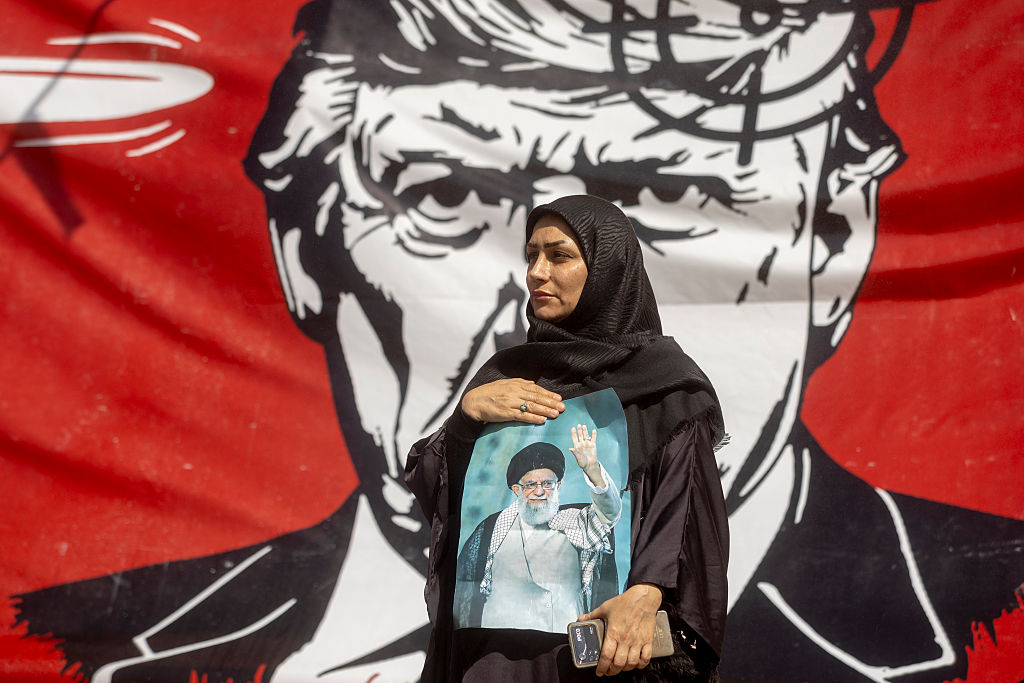
A woman holds a portrait of Iran's slain Supreme Leader, Ayatollah Ali Khamenei, in front of a banner depicting President Donald Trump with a target on his head, during Khamenei's funeral ceremonies on July 5, 2026 in Tehran, Iran. —Majid Saeedi-Getty Images Fears of a return to full blown war are growing as the United States and Iran are increasingly trading military strikes . The memorandum of understanding the two countries signed after 40 days of American and Israeli bombing on Iran and Iranian strikes against the Gulf countries and Israel lasted barely a month before it unravelled. The Trump Administration has revoked the sanctions waivers it offered Iran, reimposed the naval blockade of Iran’s ports, conducted heavy aerial bombing on more than a 100 military targets in the country. Iran has retaliated against American allies in the Gulf: Kuwait, Bahrain, and Jordan. The speed of this collapse reveals that Washington and Tehran signed an initial agreement without ever agreeing on what it was meant to accomplish. Washington treated the initial agreement as the opening move in a process to restore freedom of navigation through the Strait of Hormuz, ease the economic strain of the closed waterway, and gradually constrain Iran’s coercive capabilities. Tehran considered it as a pause that preserved leverage while testing the Trump Administration's seriousness and appetite for a wider deal. Tehran never accepted that the agreement required it to relinquish influence over the Strait or guarantee unrestricted passage through it. The gaps in interpretation hardened quickly into suspicion. Iranian officials concluded that the U.S. was using the lull to weaken them by degrees, opening a passage out of the Strait in coordination with Oman and working to disentangle Lebanon and Hezbollah from Iran’s orbit. From Tehran’s perspective, the initial agreement had become a mechanism for extracting concessions. Iran responded by striking ships and reasserting its capacity to dis
عالمي
A War Neither America Nor Iran Can Win